Biointerface science is foundational to advancements in areas that impact our health, technology, and environment. The behavior at the boundary between biological systems and materials determines the performance and safety of medical devices, diagnostics, materials, and sensors. Mastering these interfaces is key to innovation and better outcomes across many fields.

QCM-D membrane biophysics

Understanding and Controlling Biointerfaces

Biointerfaces—phenomena where biological molecules interact with materials—occur in a wide range of contexts, from medicine and biotechnology to environmental and industrial settings. This breadth makes it essential to study and understand these interfaces for advancement and innovation across many fields. For over two decades, QSense® QCM-D  has been a cornerstone of the discipline, enabling real-time, label-free analysis of biomolecular and material interactions at surfaces and interfaces. By providing key insights into the mechanisms at play, this versatile technology deepens fundamental understanding and supports the rational design of biomaterials, medical devices, sensors, drug delivery systems, and more—driving progress from basic discovery to advanced applications.

Key Capabilities of QCM-D in Biointerface Analysis

Monitor Interfacial Processes

Track the dynamics of adsorption, desorption, layer build-up, and degradation to reveal mechanisms that drive material performance in biological environments.

Evaluate Surface Modifications and Coatings

Assess the performance and stability of antifouling, bioactive, or functional coatings under relevant conditions to ensure optimal and sustained surface properties.

Detect and Address Interfacial Challenges

Identify and quantify phenomena such as non-specific adsorption, biofilm formation, and surface fouling that may compromise material performance, enabling proactive optimization of materials and coatings.

QSense-Omni---a-modular-and-versatile-instrument

Applications for QSense QCM-D in Biointerface Science

  • Fundamental Research: Mechanistic studies of biomolecular and material interactions,
    investigation of adsorption/desorption dynamics, conformational changes,
    and interfacial phenomena, model membrane platforms and basic biophysical research

  • Medicine & Healthcare: Biocompatibility, biomaterials,d rug delivery systems and nano-carriers,
    Cell-surface interactions,b iofilm formation and prevention

  • Biotechnology: Biosensors, diagnostic devices, protein-ligand, antibody-antigen,
    and nucleic acid interactions

  • Environmental Applications: Water purification and filtration membrane fouling, biosensors for
    pollutant/pathogen detection, antifouling and antimicrobial coatings for environmental infrastructure

  • Industrial Applications: Cleaning strategies and residue removal, biofilm monitoring and control
    in manufacturing and marine industries, food processing and packaging hygiene
    (including antimicrobial surfaces)
Namnlös design (13)

QCM-D analysis in Biointerface Science

Download the overview to read about some of the latest and most cutting-edge uses of QCM-D technology in biointerface science, demonstrating the breadth and depth of scientific insights that are possible to obtain with QSense QCM-D.

biolin-water-on-hydrophobic-fabric (1)-1

Measurement and phenomena

QSense is an advanced, surface-sensitive technology that enables real-time, label-free analysis of molecule–surface interactions and reactions. It is used to investigate phenomena such as adsorption, desorption, and structural or mechanical changes in surface-adhering layers.


Omni QSense 4th generation QCM-D platform

QSense is based on the QCM-D technology

Quartz Crystal Microbalance with Dissipation monitoring (QCM-D) is a real-time, surface sensitive technique for analyzing surface-interaction phenomena, thin film formation and layer properties.

QSense Benefits

Intuitive, automated lab bench instrument

Easy to implement in any laboratory setting

Time-resolved data collection

Real-time monitoring of molecular interactions and reactions at surfaces and interfaces for insights into interfacial processes and mechanisms

Sample-efficient operation

Obtain robust results from small sample volumes, down to 90 μl

Fast results

Insights delivered within hours

Pre-programmable standard scripts

Ensure rapid and reproducible measurements

A wide range of sensors

Investigate molecular interactions with diverse material surfaces

QSense Omni is the latest QSense instrument, giving you the sharpest QCM-D data and a smooth journey in the lab.

Explore QSense sensors

E05A1990

QSense PDMS Sensor

PDMS is an excellent choice for
lubrication of syringes and similar lab wares, where maintaining the integrity of stored fluids and biological samples is crucial. Additionally, its thermal and electrical insulation properties protect sensitive samples and components.

E05A2014 edited-1

Discover the Sensor for your needs

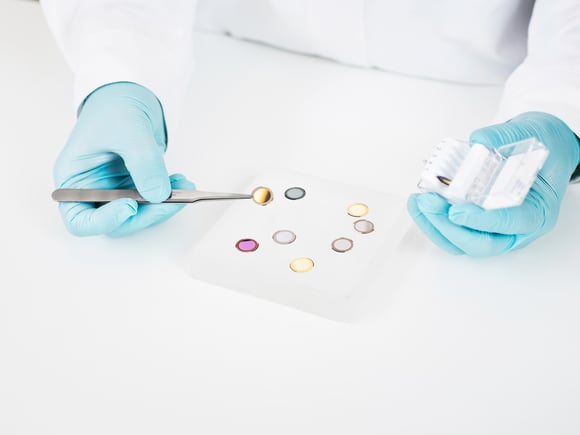
The sensor is at the heart of the QCM-D experiment. Browse the widest range of sensors on the market to find out which sensor material and coating is best suited for your research needs.
QSense-sensors-2

QSense Sensors for Biointerfaces

QSense sensors for biointerface interaction analysis offer a versatile selection of QCM-D sensors designed to replicate surface materials commonly used in this field. 

Publications

Thousands of studies, countless discoveries—here are  a few examples