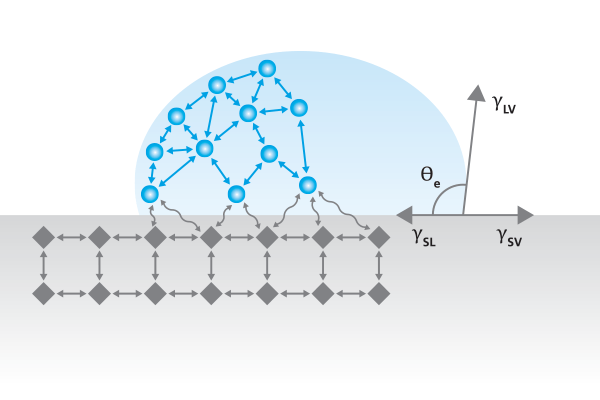
Plasma treatment is widely used to improve wetting and adhesion on polymers, composites, and other low‑energy surfaces. However, without quantitative data it can be difficult to know if your treatment parameters are truly delivering the desired surface properties.
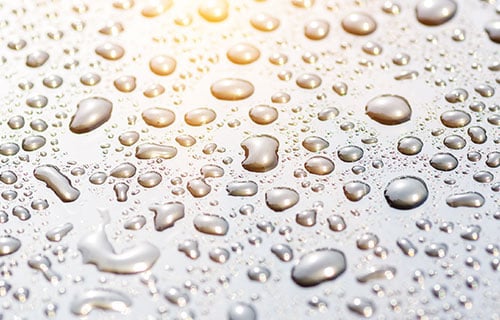
By measuring contact angles before and after treatment, you can directly see how surface wettability and surface free energy change with plasma power, gas, pressure, and treatment time. This provides a fast, sensitive, and non‑destructive way to:
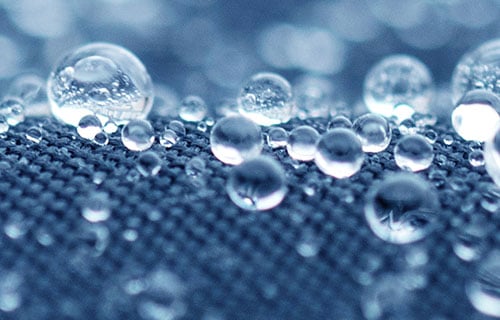
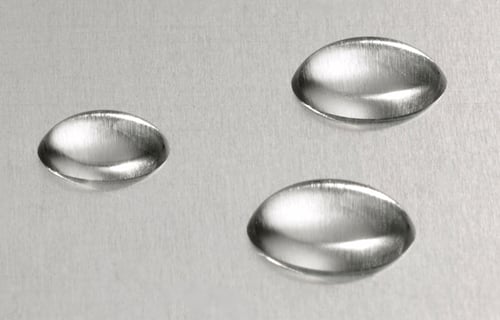
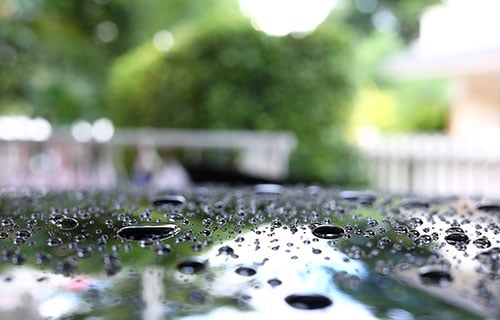
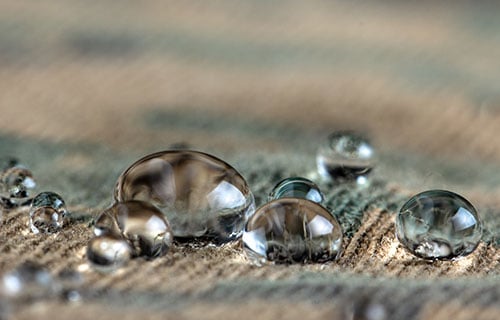
Superhydrophobic and superoleophobic surfaces combine low‑energy surface chemistry with micro‑ or nanostructured roughness to create extremely high water and oil contact angles, low roll‑off angles, and low contact angle hysteresis. These highly repellent surfaces are used in applications such as self‑cleaning and anti‑wetting coatings, anti‑icing, anti‑corrosion, and drag‑reducing materials.
Contact angle measurements make it possible to distinguish hydrophobic and oleophobic from truly super‑repellent behavior, compare different surface chemistries and textures, and monitor durability over time, cleaning cycles, or environmental exposure. This quantitative information supports the development and optimization of high‑performance repellent surfaces.

Paper and board surface performance is strongly influenced by wettability, surface free energy, and roughness. These properties affect how inks, adhesives, and barrier coatings spread on a surface, which in turn governs print quality, glueability, and resistance to water, oils, and other liquids.
By linking contact angle, surface free energy, and roughness data to end‑use performance, paper and board surfaces can be optimized for demanding applications in printing, packaging, and barrier materials. This supports consistent production quality, more efficient coating formulations, and the development of advanced paper‑based alternatives to traditional packaging materials.

Try the instrument selector