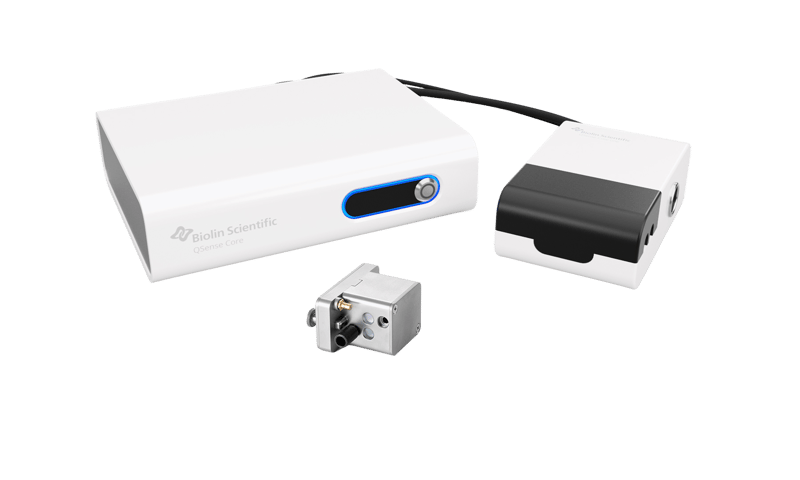
QSense
Enables the combination of QCM-D and electrochemistry on the same surface.
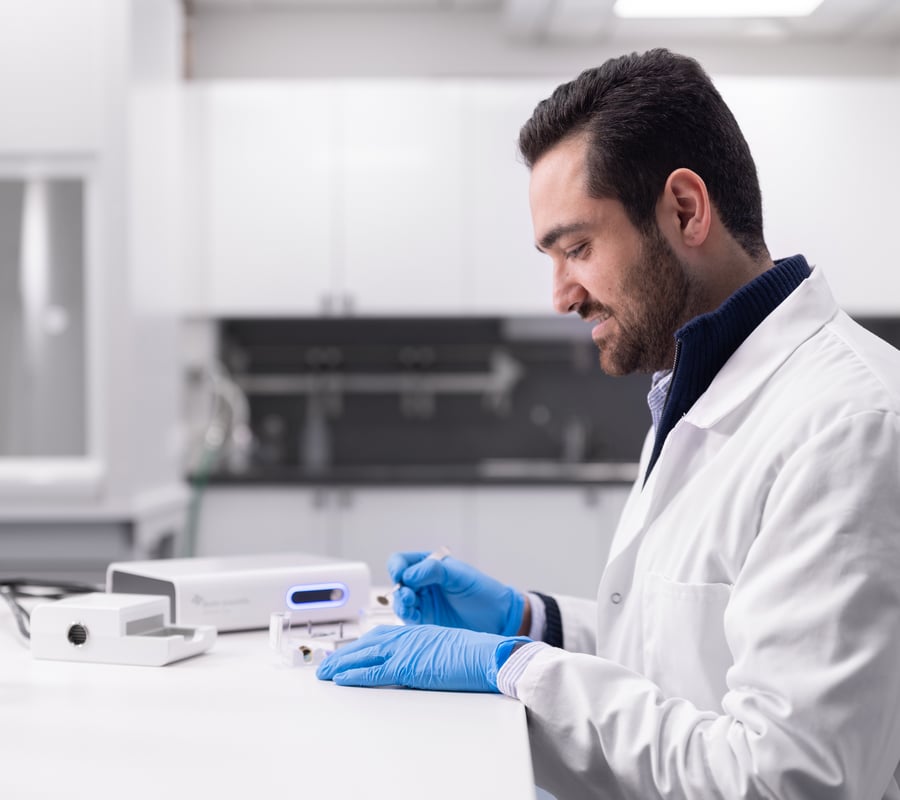
QSense Core One Electrochemistry enables electrochemical control and QCM-D measurements on the same sensor surface. By monitoring frequency and dissipation while applying potential or current, you can follow how electrochemically controlled interfaces change in real time.
Electrochemical methods reveal current, potential, charge transfer, impedance and stability. QCM-D adds complementary information about physical changes at the surface — such as adsorption, desorption, deposition, dissolution, film formation, swelling and layer softening or restructuring.
By combining both measurements on the same surface, you can correlate electrochemical events with real-time changes in mass, layer structure and viscoelastic properties. This helps reveal whether an electrical response is accompanied by material build-up or loss, changes in layer mechanics, structural rearrangement or changes in film stability.
Together, electrochemistry and QCM-D help connect electrical response to the physical interface processes that influence material performance, biological interactions, sensing response, stability and function.
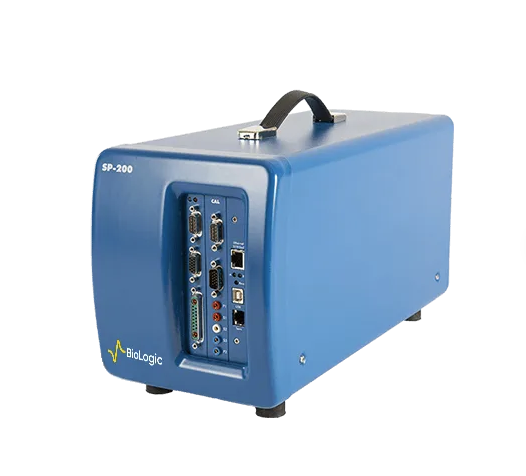
Solutions for Integration and alignment with potentiostats from BioLogic, Including recommended SP-200 Potentiostat, makes data analysis from combined measurements easy.
Contact us for guidance on compatible potentiostats.
Click here for more details on the electrochemistry module in the QSense Core One Electrochemistry system.




