








In a hurry?
See how Core One combines premium QCM-D data quality, hands-on control and broad configuration flexibility in one compact manual platform.
Phenomena
-
 Adsorption
 -
 Desorption
 -
 Binding and interactions
 -
 Swelling
 -
 De-swelling, crosslinking and collapse
 -
 Degradation, corrosion and etching
Premium data quality with complete experimental freedom
0.01 Hz noise floor
Detect tiny interactions and films
Complete analysis set-up
QSOFT AND DFIND SOFTWARE
.png?width=900&name=image%20(48).png)
QSense software is tailored to help you maximize the potential of your QCM-D measurements. With QSoft capturing your data and Dfind simplifying your analysis, you can streamline your research process effortlessly.
Measurement conditions
-
 Flow mode
 -
 Stagnant mode
 -
 Gas phase Requires add-on
 -
 Liquid phase
 -
 Harsh chemicals
 -
 Low temperature Requires add-on
 -
 High temperature Requires add-on
 -
 Humidity Requires add-on
 -
 Variable pressure Requires customization
 -
 Inert surface Requires add-on

Sharper signals for stronger insights
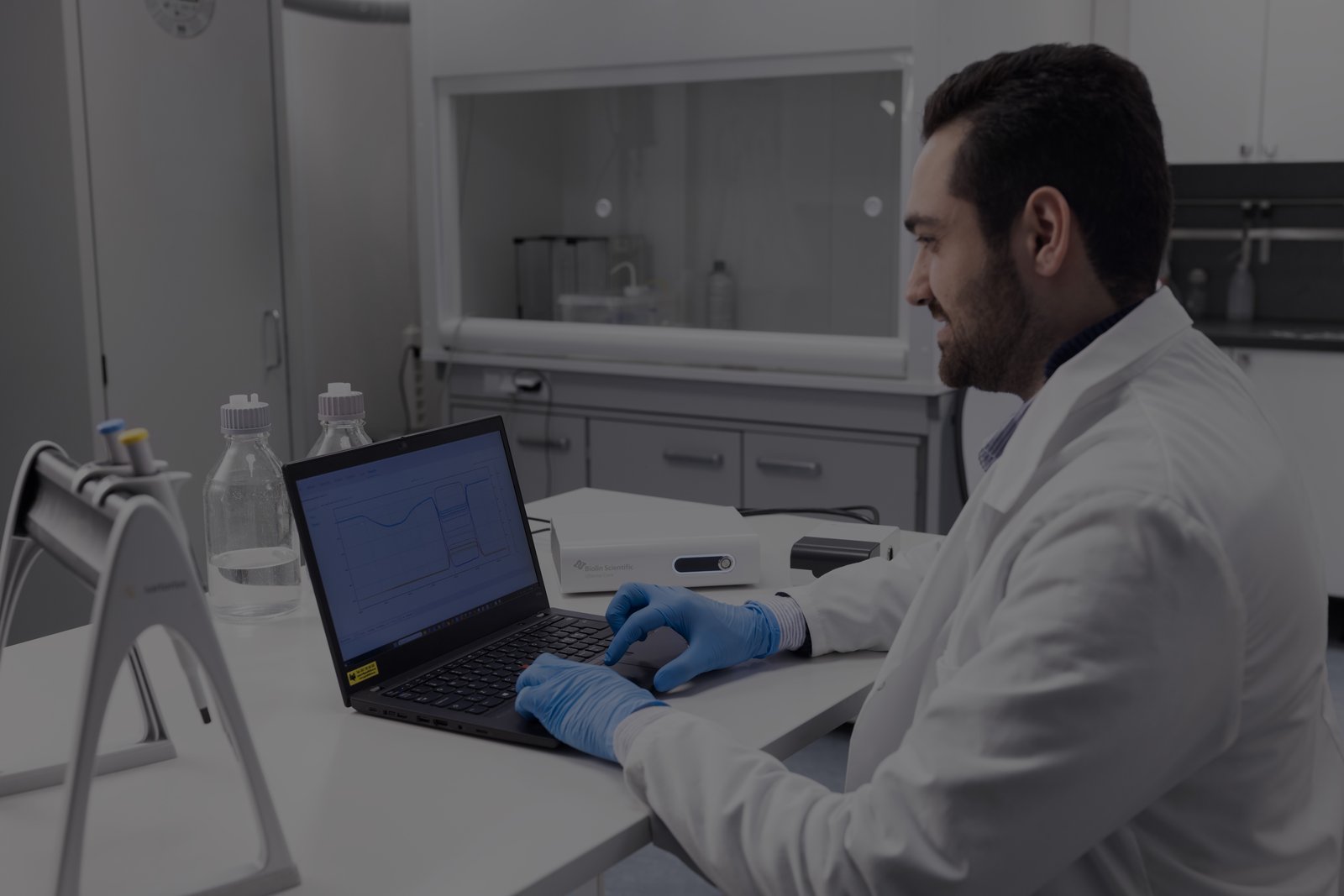
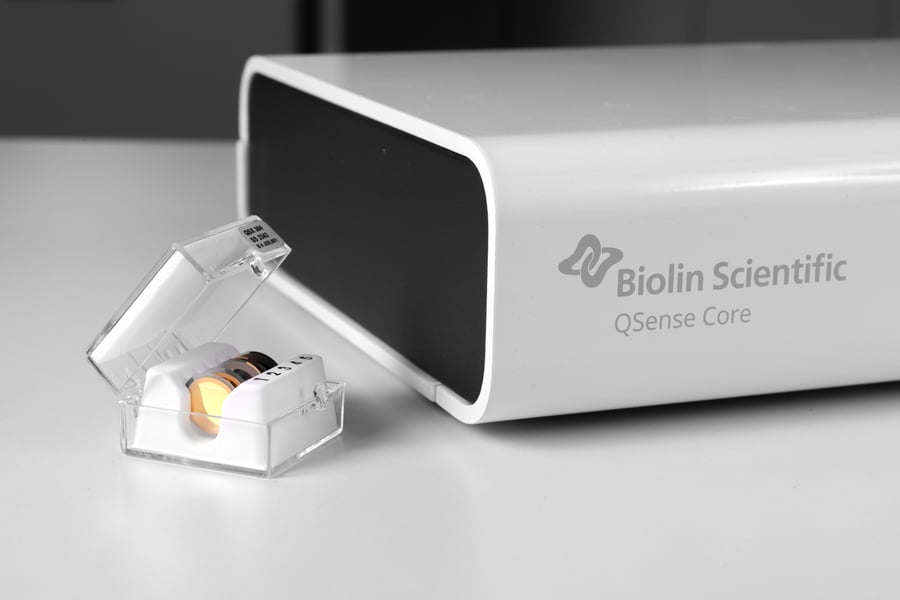
QSense Core One brings premium QCM-D data quality to manual, tubing-based experiments. Next-generation electronics, advanced signal processing and trusted QSense measurement technology deliver cleaner signals, lower noise and enhanced stability.
Whether you are studying low-mass adsorption, long-term kinetics or complex viscoelastic films, Core One helps reveal subtle interfacial processes with clarity and confidence.
- Can detect adsorption events down to 0,5 ng/cm2
- 0.6 Hz/h drift
- 0.01 Hz frequency noise
Smarter workflow with QSoft
QSoft has been redesigned to make manual QCM-D experiments easier to configure, verify and monitor. Automatic resonance tracking, pre-run checks and flexible acquisition settings guide the user toward high-quality measurements without removing experimental control.
- automatic resonance tracking;
- signal quality evaluation;
- stability thresholds;
- exact acquisition intervals;
- live adjustment during the run;
- automatic timestamps.
Build the experimental setup your research requires
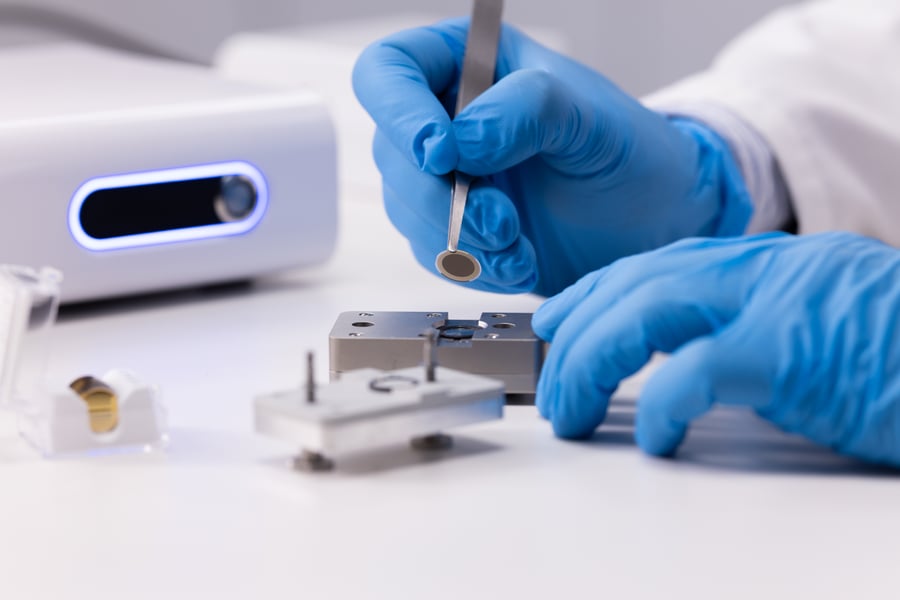
QSense Core One supports QCM-D experiments beyond a standard flow configuration. Connect complementary analytical instruments, synchronize data streams and move between compatible modules for electrochemistry, microscopy, ellipsometry, humidity, elevated temperature and specialized surface access.
Experimental example: polyelectrolyte multilayer build-up
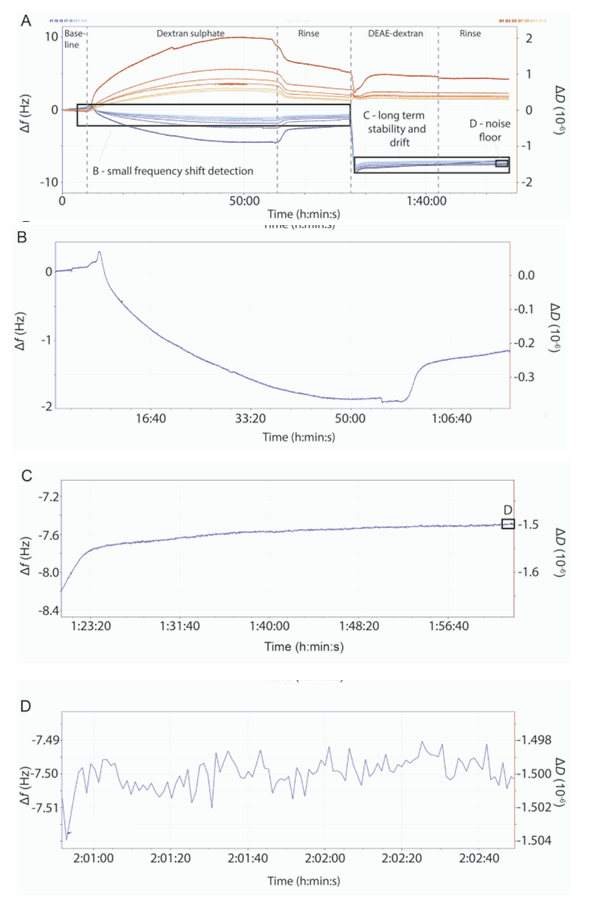
Can your QCM-D detect the first layer, and still be trustworthy two hours later?
We put QSense Core One to the test with a real polyelectrolyte multilayer on gold. It resolved a ~2 Hz shift from the first adsorbing layer and held drift to ~0.4 Hz/h after more than two hours of measurement. That matters when you study low coverage, dilute samples, early binding events or slow, multi-step processes.

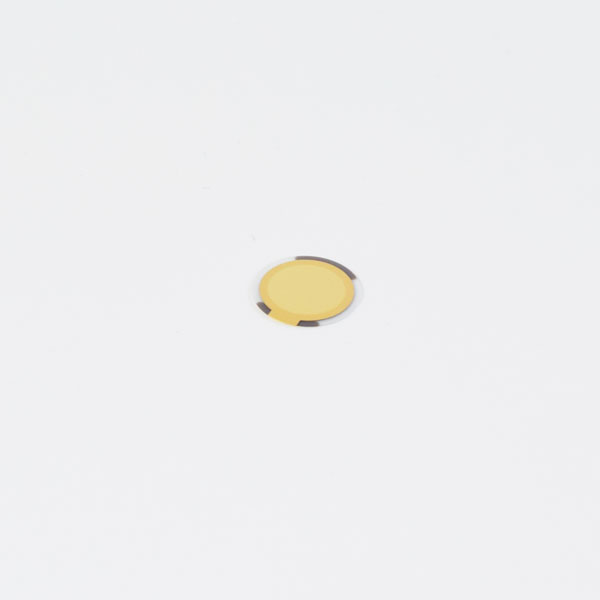
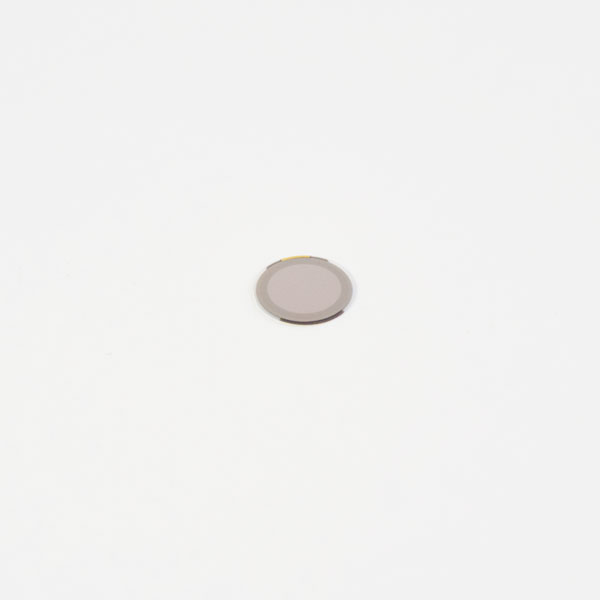
Standard sensors
The sensor is at the heart of the QCM-D experiment. Browse the widest range of sensors on the market to find out which sensor material and coating is best suited for your research.
We offer over 50 standard sensors - from various metals, oxides and carbides to polymers, functionalized coatings and and standardized soils. Our sensors are developed and produced to provide you with stable, reliable and reproducible data. Full performance is ensured through extensive quality controls and guaranteed for one-time use according to the recommendations.
Customized sensors
Sensor materials and coatings based on your specific needs
See more here
Would you like to know more about the details of Dfind and learn how the subscription works?

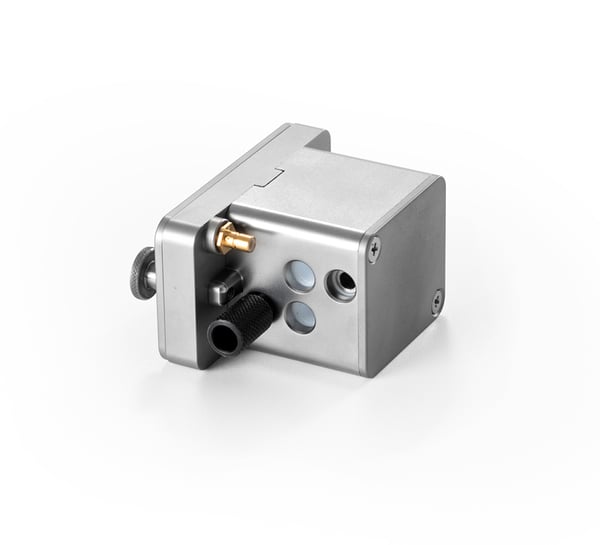
Electrochemistry Module
For simultaneous QCM-D and electrochemistry measurements on the same surface. Enables cyclic voltammetry and electrochemical impedance measurements to explore polymer behavior, electrostatic interactions, corrosion, etc.
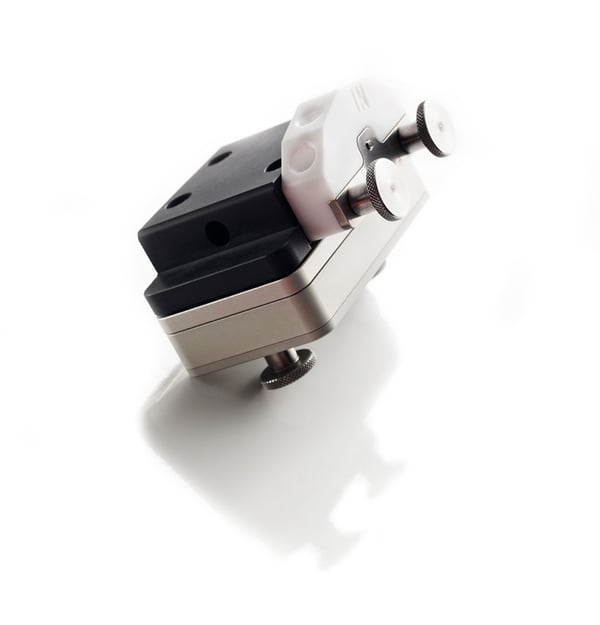
Ellipsometry Module
Enables simultaneous QCM-D and ellipsometry measurements on the same surface, which allows for quantification of solvent content in the film. It also gives a refined analysis of the morphological changes of the adsorbed film.
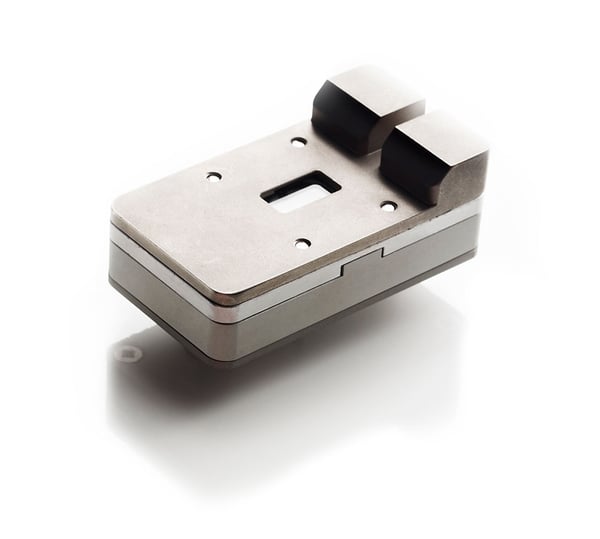
Window Module
The Window Module allows optical access to the sensor surface through a sapphire window. It enables experiments with UV-induced reactions and when used in the QSense Core One chamber, the compact design also enables microscopy studies of reactions on the sensor.
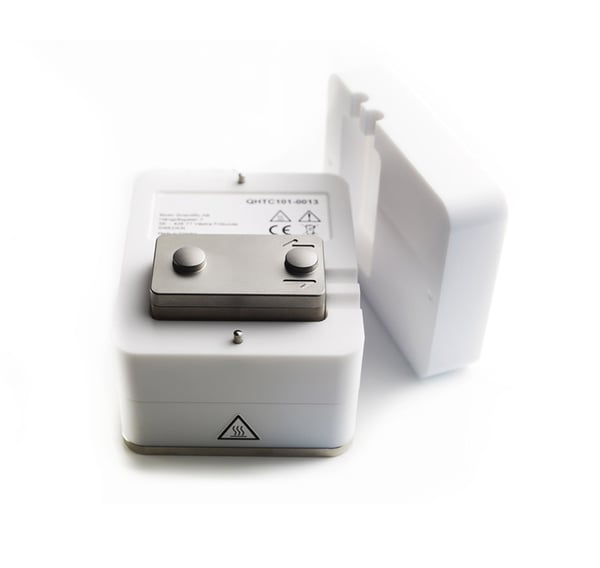
High Temperature Chamber
With the High Temperature Chamber you can perform measurements in an extended temperature range of 4-150°C.


Dr Sivashankar Krishnamoorthy, Luxembourg Institute of Science and Technology
"We spent time to understand different ways to customize the sensor chips, assay configuration, and flow routines to rational design of nanoplasmonic and nanopatterned sensors. Have had a great experience so far."

Professor Dr. Marité Cárdenas, Health and Society, Malmö University
"The instrument is easy to use, and has a long working life as long as you follow the maintenance instructions! The technical staff at Biolin Scientific are a pleasure to work with: They are nice and always give quick feedback and support."

Kenichi Sakai, Associate Professor, Tokyo University of Science
"We are working on academic research in the field of colloid and interface chemistry and our main work is synthesis of novel surfactants and characterization of their properties. We use QCM-D as a must-tool to comprehend molecular adsorption/desorption behaviors specifically observed at a solid-liquid interface."

Jodie Lutkenhaus, Associate Professor, Texas A&M University
"We use the QSense high temperature model that allows us to investigate polyelectrolyte complexes and their response to temperature. We’re also using the electrochemistry module so we can run our standard electrochemical measurements at the same time as we run the QCM-D."

Malkiat Johal, Professor of Chemistry, Pomona College
"The operating principles are straightforward and the students can focus on the science. And so, that’s something that we have been really happy with, it really works in this kind of setting. It’s an ideal method for an undergraduate surface science lab."
Webinar
How Excipients, Surfaces and Formulation Conditions Affect Therapeutic Proteins
Go there

Webinar
Basics of QCM-D
Go there

Guide
How to Optimize the QCM-D Baseline Stability
Download
Overview
The Working Principles of QCM and QCM-D
Get it
Case Study
QCM-D in Drug Formulation and Storage
Get it

Overview
QCM-D vs SPR
Get it
Overview
QCM-D vs other QCMs
Get it
Overview
What is Piezoelectricity?
Get it

Overview
How QCM Results are Influenced by Layer Distribution
Get it

Overview
Why the Resonance Frequency of a QCM Sensor is 5MHz
Get it

Overview
Characterization of Polymer-based Systems
Get it

Webinar
Using QCM-D in the Food Industry
Go there
Overview
What is Biocompatibility?
Get it

Overview
Why it is Useful to use Multiple Overtones in QCM Measurements?
Get it
Webinar
Nanocellulose Research with QCM-D
Go there
Case Study
Analysis of Surfactant-Surface Interactions with QSense
Get it

Webinar
Getting Started with QSense Dfind
Go there

Webinar
Data Modeling in QSense Dfind
Go there

Case Study
QCM-D as a Screening Tool for Protein Adsorption
Get it
Case Study
Analyzing Vapor Uptake and Release with QCM-D
Get it

Webinar
Surface Science – a Field Rich in Science and Applications
Go there

Guide
QCM-D Data Analysis
Download
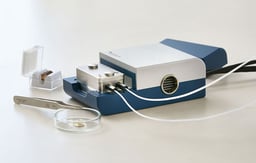
Demo
QSense Explorer Online Demo
Webinar
QCM-D as a Tool to Study the Binding of Viruses
Go there
Overview
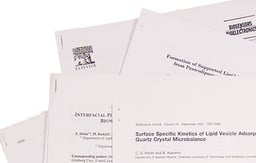
Key Publications on the Formation of Supported Lipid Bilayers
Get it
Webinar
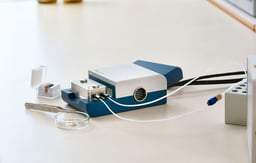
Characterization of Surfaces and Surface Reactions in Energy Storage
Go there

Video
Development of a New Method for the Formation of SLBs on Solid Support using QSense QCM-D
Watch

Webinar
QCM-D Technology: From Fundamental Membrane Biophysics to Translational Applications
Go there

Guide
QSense Etching Guide
Download
Webinar
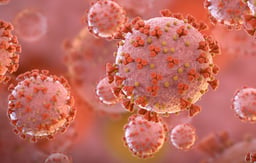
QCM-D Characterization of Antimicrobial Lipid Interactions with Supported Lipid Bilayers: Towards Antiviral Applications in the Biomedical and Agricultural Sectors
Go there

Case Study
Monitoring of Polyelectrolyte Multilayer Build-up and Crosslinking using QCM-D
Get it
Webinar
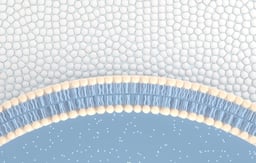
Biomembrane Models and Interactions Therein
Go there

Case Study
Screening Nanoparticle - Protein Interactions
Get it

Overview
The Sauerbrey Relation
Get it

Guide
QSense Cleaning Profile
Download
Overview
QCM-D Studies of Engineered Nanoparticles
Get it
Overview
Analytical Methods to Characterize Lipid-based Systems
Get it
Overview
Characterization of Biomolecular Interactions
Get it

Overview
QCM-D Analysis in Virus-related Research
Get it
Webinar
Determining Cleansing Efficacy of Elfan AT 84 using a QCM-D Assay
Go there

Case Study
Analyze Surface-induced Complement Activation
Get it

Webinar
Adsorption and Aggregation of Monoclonal Antibodies at Silicone Oil-Water Interfaces
Go there
Webinar
How do we Stop the Next Pandemic from an Unknown Virus?
Go there
Case Study
Characterization of Polymer Layer Swelling, Crosslinking and Collapse
Get it

Case Study
Analyzing Cleaning of Hard Surfaces with QSense
Get it

Overview
QSense Analysis in CMP
Get it
Webinar
QSense EQCM-D – and introduction to product solution and application examples
Go there
Overview
The Dissipation Factor in QCM-D Technology
Get it
Overview
Temperature Stability in QCM Measurements
Get it
Overview
What is Dissipation?
Get it

Overview
What is a Viscoelastic material?
Get it

White Paper
How to Analyze Combined QCM-D and Ellipsometry Data
Download

Guide
How to Generate Quality QCM-D Data
Download

White Paper
QCM-D vs other QCMs
Download
List
QCM-D Publications in Battery Research
Get it

Guide
How to read a QCM Specification
Download
Webinar
Dfind Basic Training Course
Go there

Overview
Information Obtained with QSense QCM-D
Get it
Overview
How to Characterize Lipid-Based Systems with QCM-D
Get it

List
QCM-D in Research
Get it
Webinar
Biomaterials – Man-made Materials for Regenerative Medicine
Go there