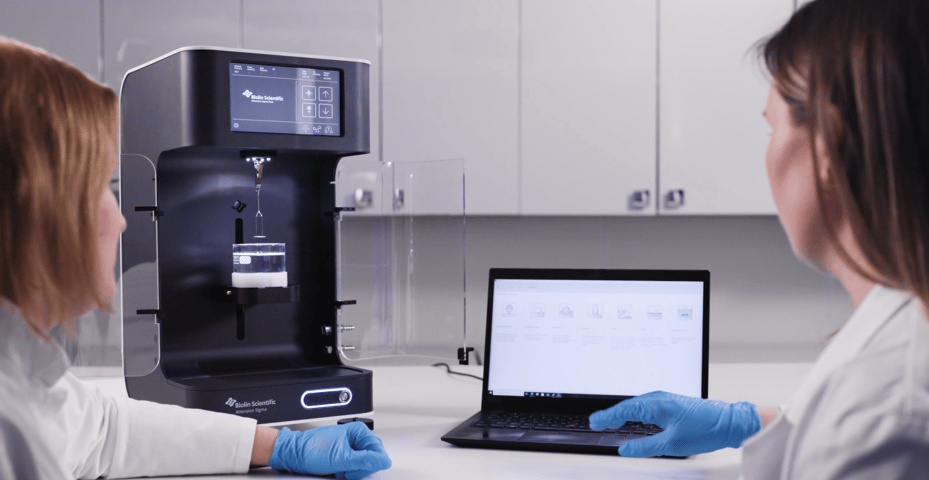
If you work with surface and interfacial tension measurements, you know that research and routine QC ask very different things of an instrument. On some days, you're deep in research exploring new formulations, running experiments and looking for every insight your measurements can give you. On others, you simply need to know, quickly and reliably, that everything looks as it should.
Most instruments are built for one or the other. That often means compromises: either more complexity than your routine users need, or less depth than your research demands.
Sigma Peak and Sigma Solo are built to change that. Sigma Peak bridges the gap between advanced research and routine QC, and Sigma Solo complements it as a dedicated instrument for routine measurements.
Sigma Peak is a force tensiometer that works both as a full research instrument with PC software and as a standalone instrument via an integrated touchscreen. Whether you're deep in a complex experiment or simply need a quick, reliable check, you don't have to switch instruments.
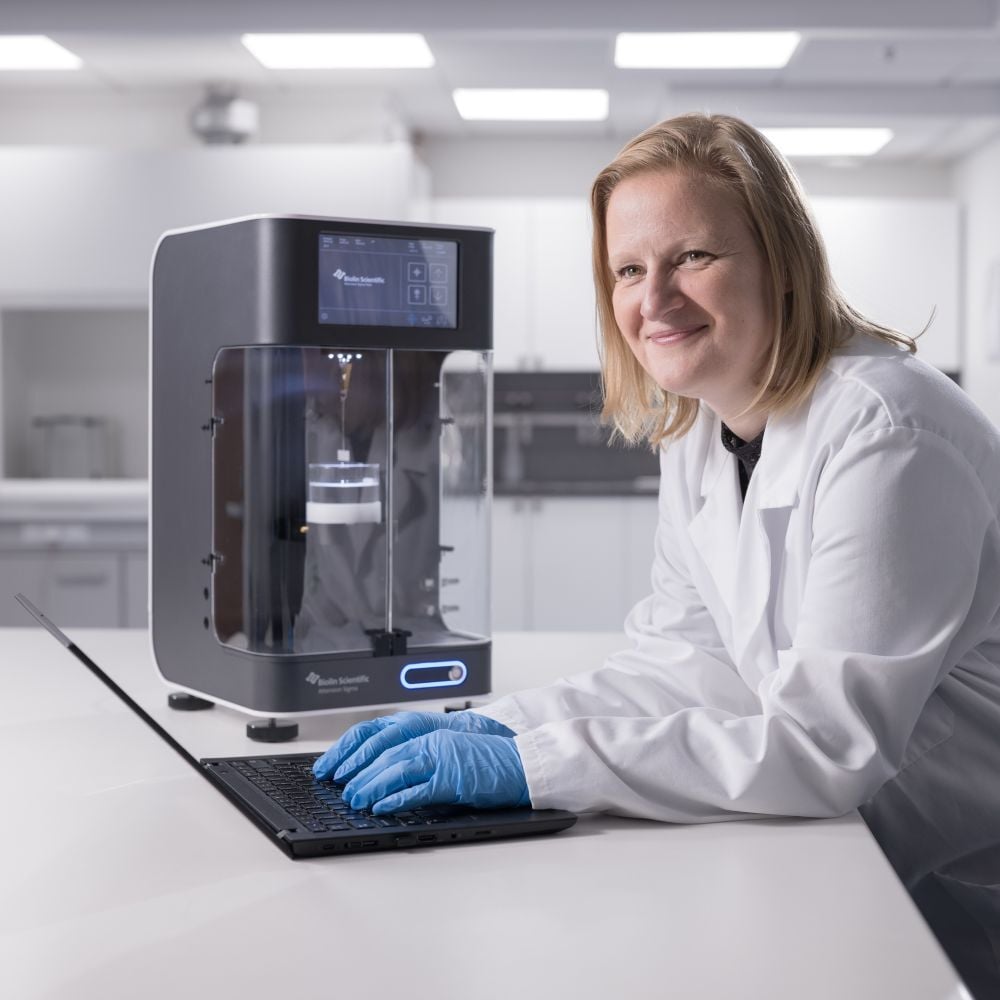 When connected to a PC, Sigma Peak runs on OneAttension software that covers the complete range of measurement modes out of the box: surface tension, interfacial tension, contact angle, surface free energy, CMC determination, density, Washburn wettability, adhesion force and sedimentation. All modes are included, on unlimited installations, with free updates going forward — no add-ons, no surprises.
When you don't need the full software setup, the integrated touchscreen lets you run surface tension, interfacial tension and density measurements directly on the instrument, with no PC required. Predefined methods and guided workflows keep measurements consistent and make it easy to hand over to colleagues who may not use the instrument every day.
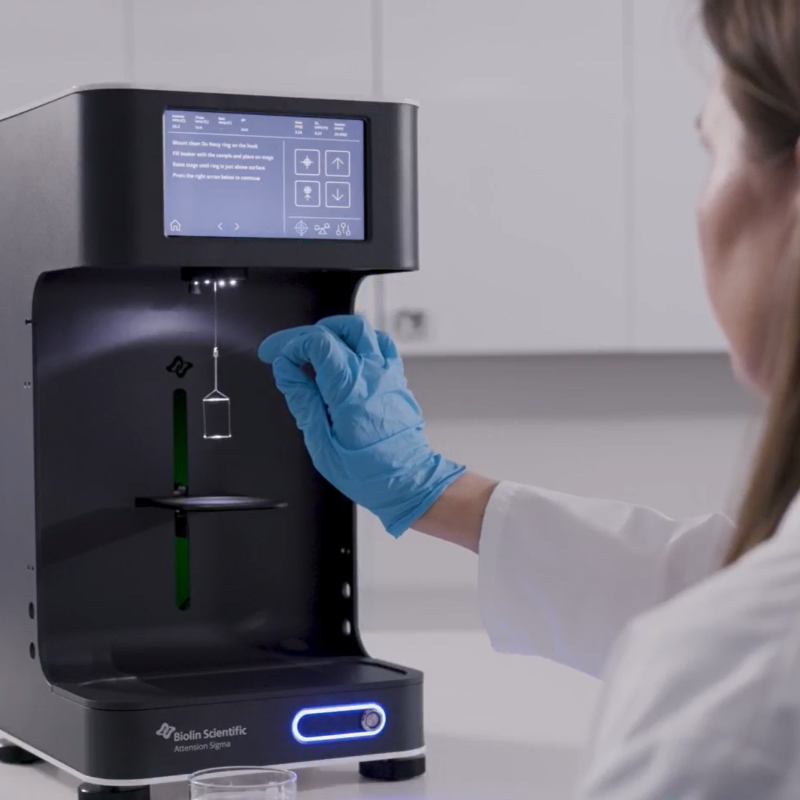 Sigma Solo is a standalone force tensiometer built for routine measurements of surface and interfacial tension and liquid density. There is no PC software to install or manage — you work directly from the touchscreen, with guided workflows that lead you through each step, keeping onboarding fast and measurements repeatable across operators.
Results are compiled into a clear PDF report that can be sent directly to a connected computer or phone, ready to be archived or shared.
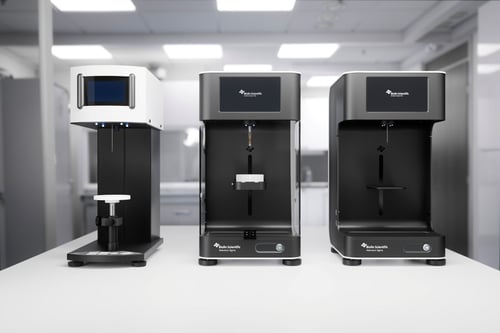
For many labs, one instrument is the right answer. But some organizations need both — a central R&D lab where new products and formulations are developed, and production or QC sites where routine measurements need to run reliably day to day. Sigma Peak and Sigma Solo are designed with that in mind, sharing the same design language and user experience so moving between them feels familiar. A typical setup might have Sigma Peak in the formulation lab, running advanced measurements with OneAttension, and Sigma Solo at production or QC sites, where operators run consistent, reliable measurements day to day.
Both instruments share the same compact footprint of 265 × 300 mm and weigh 17 kg — light enough to move between spaces and small enough for a crowded bench. They ship pre-assembled, and you can be up and running in minutes.
Whether you're leading product development, running QC, or responsible for both, Sigma Peak and Sigma Solo are designed to meet you where you are — and keep your measurements consistent across users, labs and tasks.
If you’re currently evaluating different force tensiometers, you can also read our guide on how to choose the right force tensiometer for your lab.
To explore the full Sigma range, including new application‑focused models Sigma CMC and Sigma Transformer Oil, visit our tensiometer portfolio page — or download the Sigma brochure below for a concise overview of the entire range.

Anna Junnila is Customer Care Manager at Biolin Scientific. She takes pride in making advanced technology accessible for every user and is committed to guiding customers through every stage of their research journey. She holds an MSc in Electronics and Electrical engineering from Aalto University.





.jpg?width=160&name=anna%20junnila%20(resized-1).jpg)