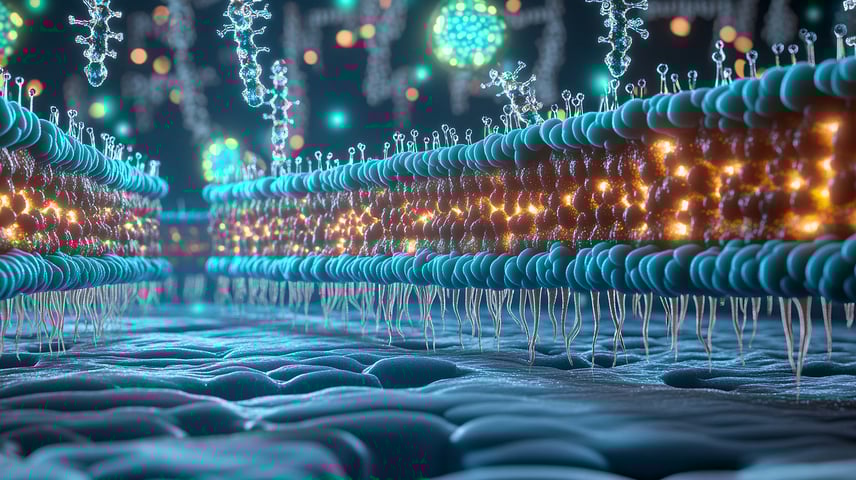
Biointerfaces – where biological molecules meet material surfaces – are central to a wide range of areas, from medicine and biotechnology to environmental and industrial applications. The way proteins, lipids, polymers, and cells interact with metals, ceramics, and polymers can determine whether an implant integrates, a drug carrier releases its payload, or a sensor remains stable and selective over time.
For more than two decades, QSense® QCM-D has been a cornerstone in biointerface science enabling real-time, label-free analysis of biomolecular and material interactions at surfaces and interfaces.By providing insight into both mass changes and viscoelastic properties, QCM-D helps uncover the mechanisms at play and supports the rational design of biomaterials, medical devices, sensors, drug delivery systems, and more – all the way from fundamental discovery to advanced applications.
The choice of surface matters
Having a powerful technique is only part of the story. To translate fundamental insight into real-world impact, the surface you use in your experiments needs to be as relevant as possible to your intended application. In practice, this means that if you work with for example:
- Orthopedic or dental implants
- Cardiovascular stents or pacemaker leads
- Biosensors or microfluidic devices
- Drug delivery systems, nanomedicines, or filtration membranes
the material of your QCM-D sensor should mirror the material your molecules will encounter in the final product or system. A generic model surface can be useful in early screening, but when you want to understand and control a specific biointerface, material relevance becomes critical.
What QSense QCM-D reveals at the biointerface
Once you have a relevant surface, QSense QCM-D allows you to follow key events at the biointerface in real time, without labels. Typical questions you can address include:
- How much of your molecule of interest adsorbs to different surface materials, and how stable is that adsorption?
- How do changes in concentration, pH, ionic strength, or temperature affect adsorption, layer structure, and viscoelastic properties?
- How are molecules arranged at the surface – do they form compact, rigid films or soft, hydrated, and dynamic layers?
- How do surface chemistries or coatings impact molecular interactions, resistance to fouling, or layer robustness?
- How do multilayer films or biomimetic membranes build up step by step, and how do they respond when exposed to relevant media, such as serum, buffer, or process streams?
By combining frequency and dissipation information, QCM-D provides a detailed picture of how much material is on the surface, its mechanical (viscoelastic) properties, and how the interfacial layer responds to changing conditions over time.
A versatile sensor portfolio for biointerface studies
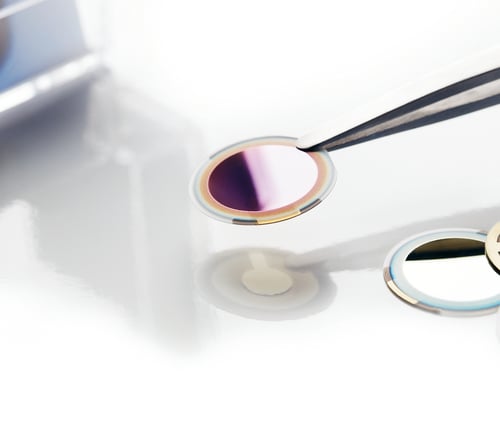
To make it easier to design experiments on relevant materials, QSense offers a broad portfolio of QCM-D sensors tailored for biointerface interaction analysis. These sensors cover metals and alloys, ceramics, polymers, oxides, and glasses commonly used in biotech, medtech, and pharmaceutical contexts.
Material categories include:
- Metals and alloys for implants, tools, and electrodes
- Ceramics for dental and orthopedic applications
- Polymers for labware, membranes, and medical devices
- Oxides and glasses for biosensors and microfluidics
Together, this range allows you to move from generic model systems to application-relevant surfaces, while keeping the high level of control and reproducibility needed in QCM-D experiments.
From surface choice to better experimental design
Linking your experimental surface to your real application has several practical benefits:
- More realistic adsorption and fouling behavior
- Better understanding of how coatings or modifications perform under relevant conditions
- Clearer comparisons between material options in early development
- A more direct line from mechanistic insight to design decisions for biomaterials, devices, or formulations
In other words, the sensor selection becomes a strategic part of experimental design – a way to bridge the gap between fundamental biointerface science and real-world performance.
Content offer: Sensor selection for biointerface interaction analysis
To support the sensor choice in your work, we have compiled a concise overview of QSense sensors for biointerface interaction analysis. It summarizes:
- Sensor codes
- Materials
- Typical delivery times
- Representative application areas
Use it as a quick reference when planning new QCM-D studies or when you want to translate your application – such as an implants, biosensors, or membranes – into a relevant sensor surface.