Cleaning is often judged by its practical outcome: does the product remove dirt, leave the surface clean, and perform reliably in its intended application? Behind that result is a series of molecular interactions between the surface, the soil, the formulation, and the surrounding liquid.
In this upcoming webinar on September 22 with CR Competence, Dr. Roberto Ortiz will introduce cleaning from a physicochemical perspective. He will explain why some surfactants and ingredient combinations are more effective than others, and how these effects can be studied in practice.
Understanding cleaning at the molecular level
Cleaning performance is largely determined by interactions at surfaces and interfaces. Surfactants and other ingredients can adsorb to surfaces, lower surface tension, change wetting behavior, loosen deposits, and influence how soils detach. As a result, even small formulation changes can have a significant impact on cleaning efficiency. The webinar will provide an introduction to these molecular processes and show how physicochemical methods can help reveal the mechanisms behind effective cleaning.
From fundamentals to real industry applications
The session will combine key concepts with examples from real industrial applications. Dr. Ortiz will discuss how QCM-D and contact angle measurements can be used to surface interactions related to cleaning.
QCM-D, or Quartz Crystal Microbalance with Dissipation monitoring, enables real-time studies of changes in mass and viscoelastic properties at surfaces. This makes it useful for investigating adsorption, removal, film formation, and other surface interactions involved in cleaning.
Contact angle measurements provide insight into surface wettability and help show how liquids interact with surfaces before, during, and after cleaning. Together, these techniques offer a practical way to understand and evaluate cleaning performance at the surface level.
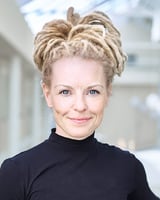
Meet the speaker: Dr. Roberto Ortiz
Dr. Roberto Ortiz brings both academic and industrial experience in sensors and assay development, surface modification and characterization, enzyme kinetics, biosensors, and electrochemistry. He holds a PhD in Analytical Chemistry from Lund University in Sweden and has also worked at the Technical University of Denmark, where he focused on polymers and interfaces. At CR Competence, Roberto contributes expertise in techniques including ellipsometry, Atomic Force Microscopy, QCM-D, and electrochemical methods.
Who should attend?
This webinar is relevant for anyone working with cleaning formulations, detergency, surface science, coatings, materials, or product performance evaluation. It will be especially useful for those who want to better understand how interfacial techniques can support formulation development and application testing. Whether you are developing new cleaning products, comparing surfactant systems, troubleshooting performance issues, or looking to understand cleaning mechanisms more deeply, this session will offer practical insights into how surface-sensitive methods can help.
Join the webinar September 22
On September 22, Dr. Roberto Ortiz from CR Competence will present “How QCM-D and contact angle can be used to study why some surfactants work better than others.” The webinar will connect fundamental cleaning mechanisms with real industry examples, showing how QCM-D and contact angle measurements can be applied to formulation and surface challenges.
Register below to attend